
UX Strategy & Research
May 5, 2025

Every project starts with the same question: who are we building this for, and why should they care?
Experience has taught me that gut feelings don’t survive stakeholder conversations. Data does. But data alone doesn’t move products forward. It needs context, interpretation, and a clear narrative. My role is to map the landscape, understand users, analyze competitors, and identify opportunities that teams can realistically act on.
Research, for me, isn’t about collecting information. It’s about turning noise into clarity, and clarity into decisions that align teams and move products forward, especially in remote environments where shared understanding doesn’t happen by accident.
Research Outputs That Drive Real Decisions
Over time, I’ve focused on research deliverables that teams actually use. These aren’t academic artifacts. They’re practical tools that reduce debate, speed up decision-making, and create alignment.
Competitive analysis provides a structured view of how others solve similar problems. I evaluate UX patterns, content strategies, and positioning to identify meaningful gaps. Not just what competitors are doing differently, but where there’s a real opportunity to differentiate.
Personas go beyond surface-level demographics. Age and job titles rarely explain behavior. I focus on motivations, pain points, and decision triggers, creating research-backed archetypes that help teams anticipate user reactions before investing in build effort.
Journey maps visualize the end-to-end experience across touchpoints. They reveal friction that’s invisible when features are examined in isolation and help teams prioritize improvements with the biggest impact.
Positioning and opportunity maps translate abstract strategy into shared visual frameworks. Instead of debating opinions, teams point to the same model and align faster.
Research synthesis decks distill findings into recommendations executives can act on. Stakeholders don’t need raw transcripts or lengthy reports. They need clarity on what to do next, why it matters, and what success looks like.
Frameworks That Support Trade-Offs
Good research answers questions. Strong research creates a shared language for trade-offs.
I use content gap analysis and prioritization matrices to identify what’s missing and what deserves attention first. Constraints are real. These frameworks help teams debate priorities using evidence instead of intuition.
Feature prioritization often uses RICE or MoSCoW, depending on team culture. Reach, impact, confidence, and effort create comparability. Must-have and could-have force hard conversations. The goal isn’t the framework itself. It’s alignment around what actually matters.
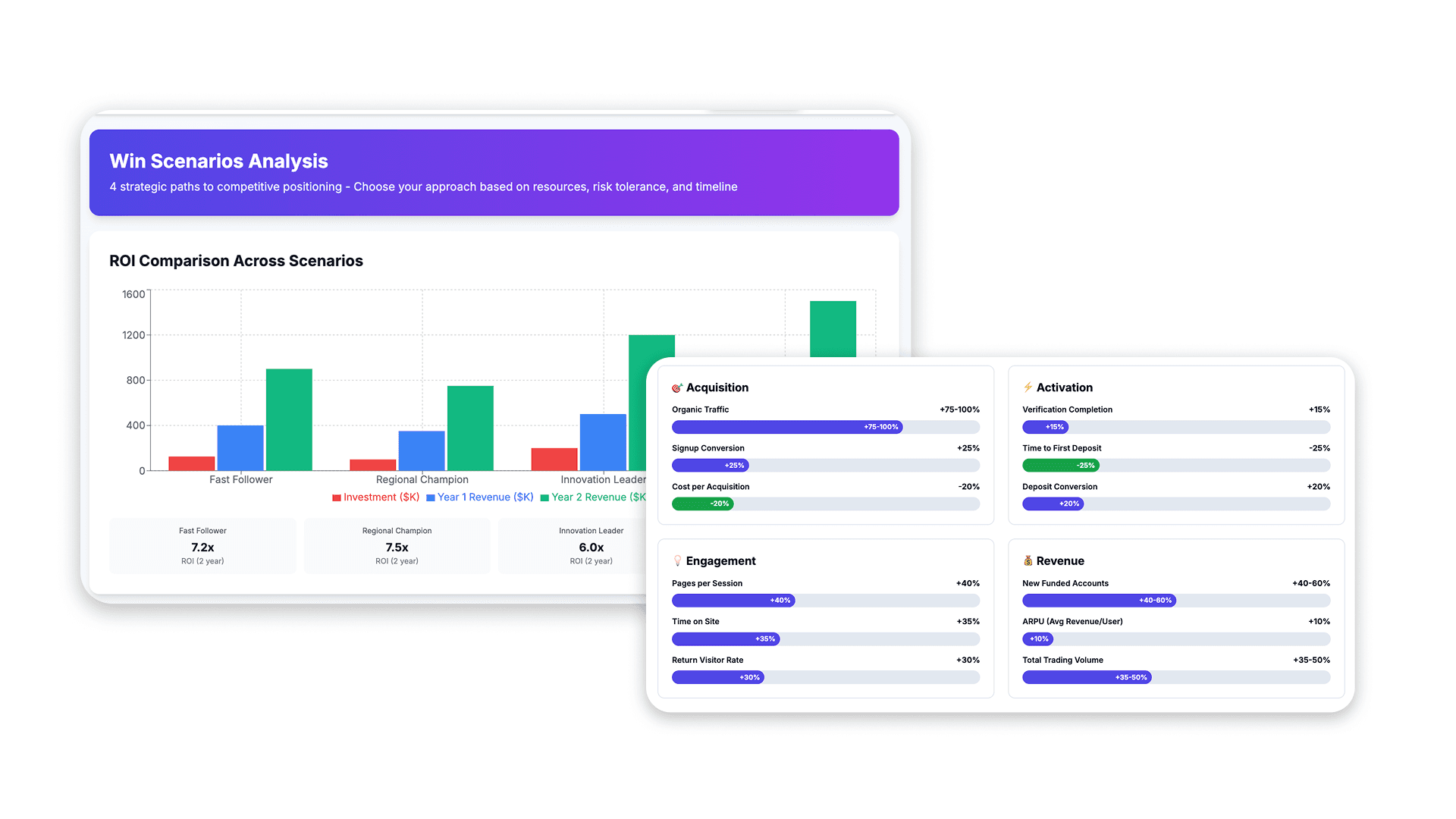
ROI projection models connect UX initiatives to business outcomes like conversion, retention, and revenue. When design decisions are tied to measurable impact, conversations shift from subjective preference to strategic investment.
Stakeholder alignment workshops surface assumptions early. Misalignment doesn’t disappear on its own. I prefer exposing it during research rather than after development has already started.
How I Move From Questions to Strategy
My process isn’t rigid, but it follows a consistent rhythm: discovery, analysis, synthesis, strategy, and validation.
Discovery begins with stakeholders. I need clarity on business goals, success metrics, and constraints before engaging users. From there, I design research protocols that uncover real behavior, not just stated preferences, while mapping the competitive landscape to understand existing solutions.
Analysis is where patterns emerge. Heuristic evaluations highlight usability gaps. Quantitative data explains what’s happening. Qualitative insights explain why. Together, they challenge assumptions and reveal root causes.
Synthesis brings structure to complexity. I use affinity mapping to identify themes and prioritize insights based on impact and feasibility. The goal is to define opportunity areas teams can confidently rally around.
Strategy turns insight into action. I develop phased recommendations and roadmaps that answer what to build first, what can wait, and how success will be measured. Each decision is grounded in research and business objectives.
Validation closes the loop. Concepts are tested with users, and stakeholders review assumptions before resources are committed. It’s far easier to adjust direction during research than during development.
Tools and Methods That Work
For research inputs, I use competitive analysis, analytics, surveys, and interviews to establish a baseline. FigJam helps me synthesize findings visually while maintaining a documented source of truth.
Frameworks like Jobs-to-be-Done keep the focus on user motivation rather than surface-level requests. Design Thinking helps structure ambiguity. JTBD ensures strategy stays grounded in real outcomes users care about.
For communication, I use Figma to design clear, visual research decks that support async review. Recently, I’ve been experimenting with Cursor to build lightweight interactive dashboards, allowing stakeholders to explore insights themselves rather than passively consuming slides. Engagement increases when people can interact with the data.
Where Research Meets Emerging Tech
AI is changing how synthesis happens. Reviewing large volumes of qualitative data used to take days. Now AI can surface recurring themes and patterns quickly. I don’t outsource interpretation, but I do use AI to reduce manual work so I can focus on connecting insights to strategy.
I’m also exploring more dynamic research artifacts. Static PDFs have limitations. Interactive dashboards that update with live analytics or ongoing feedback feel like the next step. Research shouldn’t be a snapshot. It should evolve with the product.
Another focus area is accessibility of insights. Research often gets buried in folders. I’m testing ways to surface key findings directly in design tools or project workflows, so teams see relevant user context while making decisions, not weeks later.
Why Research Fails (And How to Avoid It)
Most research failures are predictable. Teams skip stakeholder alignment and answer the wrong questions. They collect data without synthesizing insight. They present findings without recommendations, so nothing changes.
The fix is discipline. Research must start with clear questions tied to business goals. Stakeholders need to be involved early. Findings must lead to decisions. And outputs must be digestible. If a synthesis deck takes an hour to explain, it won’t get used.
The Goal: Decisions, Not Documents
Research is a means, not an end. Success isn’t measured by how thorough the report looks, but by what changes afterward.
Did the team adjust direction based on insight?
Did stakeholders align around a shared understanding?
Did we avoid building the wrong thing?
That’s the outcome I aim for. Useful research that helps teams move forward with confidence, rather than beautifully formatted documents that never leave a folder.
Case Study
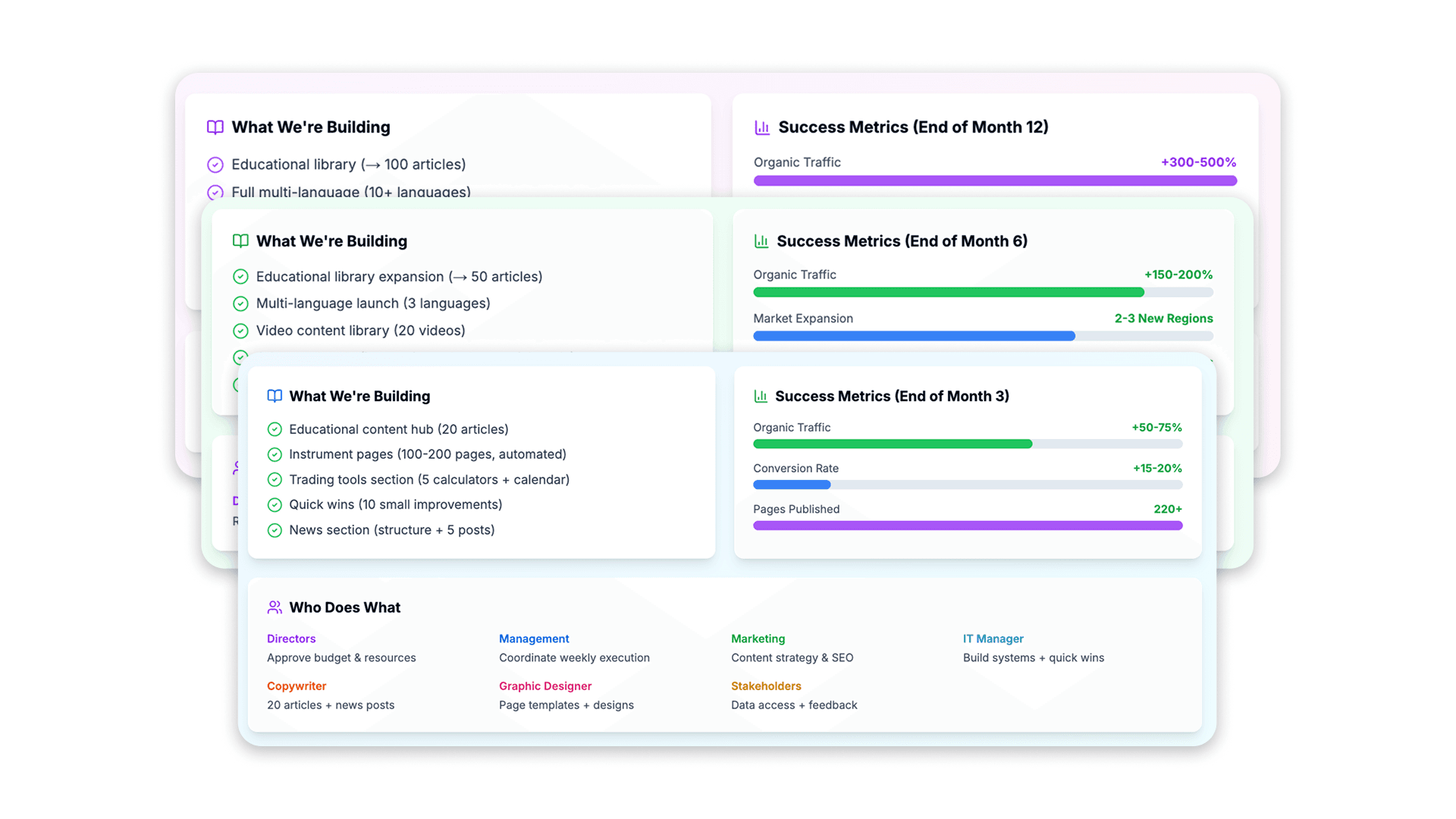
Challenge: Loyal Primus needed to understand why user engagement was declining despite feature parity with competitors.
Approach: Conducted comprehensive competitive analysis across 5 key competitors, analyzing 1,500+ pages of content and 200+ user flows. Combined with 15 user interviews to identify perception gaps.
Key Finding: Users perceived competitor products as more "trustworthy" due to educational content depth—our client had 15-20 pages vs. competitor average of 900+.
Outcome: Developed content strategy roadmap with projected ROI of $585K-1M on $180K-275K investment.
OTHER WORKS


